315 Yards, Zero Consensus: Why Riviera's 10th Hole Divides the Best Players Alive
The Genesis Invitational tees off today at Riviera Country Club for its 100th playing, and somewhere between the 8th green and the 10th tee, every player in the field will start thinking about the same thing: what to do with 315 yards of the most debated real estate in golf.
Riviera's 10th is a hole that inspires strong opinions. Rory McIlroy has said flatly, "It stinks. It absolutely stinks." Tony Finau calls it "an amazing hole." Sahith Theegala may have put it best: "Is it a great hole? Yes. Is it fair? No. That's what makes it fun and diabolical."
That's a remarkable range of reactions to a single par 4 that a strong amateur could reach with a well-struck 3-wood. So what makes this hole so polarizing — and what can regular golfers actually learn from it?
The Design: Simple on Paper, Devious in Practice
George Thomas built Riviera in 1926, and the 10th hole is the clearest expression of his design philosophy. Thomas believed that "the skill required on holes of shorter length should be as great as on long holes." The 10th is his proof of concept.
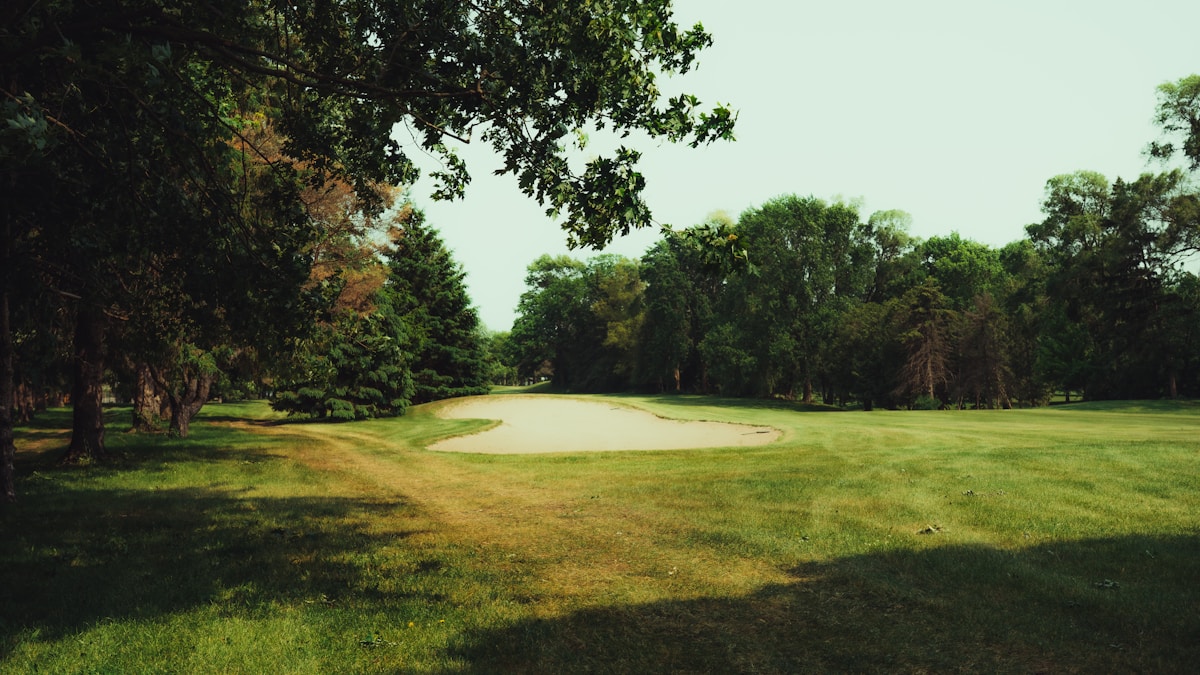
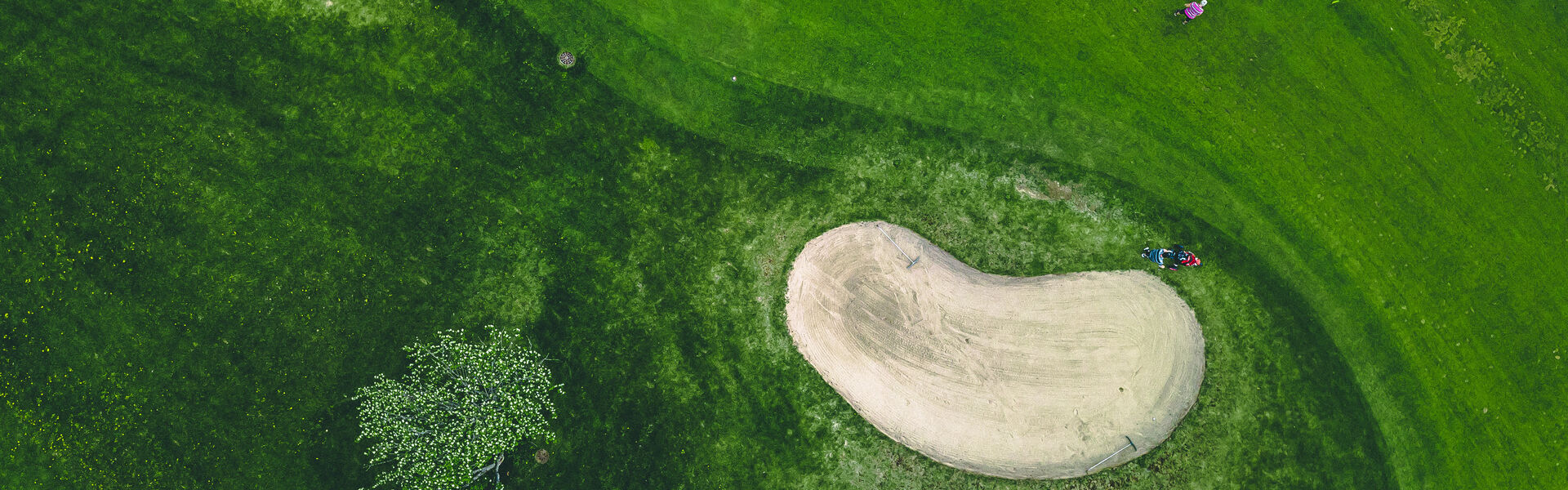
The hole plays slightly downhill from an elevated tee. The green is angled roughly 45 degrees off the line of the fairway, sloping severely from right to left. A deep bunker guards the front-right side. The fairway narrows as it approaches the putting surface, and the kikuyu rough around the green is thick enough to swallow half your golf ball.
On paper, it looks like a gift. In reality, it's a puzzle with no clean solution.
You have three basic choices off the tee:
Option 1: Lay up. Hit an iron to the center of the fairway, leaving yourself 80-100 yards in. This is the safest play, but the approach is no gimme — the green's severe left-to-right angle means the pin location dictates everything. A back-left pin with a full wedge from 90 yards is still a legitimate scoring challenge.
Option 2: Attack the green. Pull driver, aim for the front-left portion of the green, and hope. The ball needs to land in a narrow window — miss right and you're in the front bunker or worse, miss left and you're in a swale with a tricky chip back to a green running away from you. Even if you hit the green, you might be 50 feet from the pin with two tiers between you and the hole.
Option 3: The in-between. Hit a hybrid or 3-wood to a spot just short of the green, hoping to get close enough for an easy pitch. This sounds like a compromise but often plays like the worst of both worlds — not close enough for eagle, not safe enough for a comfortable par.
Why the Pros Can't Agree
The debate over Riviera's 10th isn't really about whether short par 4s belong in tournament golf. Everyone agrees they do. The argument is about whether this particular hole rewards skill or luck.
The critics have a point. During the 2024 Genesis Invitational, only seven tee shots found the green surface across three full rounds. Denny McCarthy captured the frustration: "You need to get lucky. I hit a good shot, but somebody could have landed it a foot away and ended up down in the swale." Adam Hadwin was more blunt: "Good shots don't get rewarded. You can hit perfect tee shots on 10 and have to lay up."
The problem, according to several players, is that the hole has drifted from Thomas's original design. A few years after opening, Thomas himself added bunkers around the back of the green because he felt it was too easy. Then in later decades, additional modifications — most notably work by Tom Fazio — reworked the green contours and bunker positioning. Sand buildup from decades of bunker shots has made the green increasingly severe. The kikuyu grass, which wasn't part of the original design, adds an additional layer of unpredictability around the putting surface.
The result, critics argue, is a hole where identical decisions produce wildly different outcomes. That's randomness, not strategy.
But the defenders make a compelling case too. Finau's point — "everyone has a chance to make birdie and double" — captures something genuine about the hole's appeal. It creates drama. It creates separation. It forces a decision, and decisions are where golf gets interesting.
There's also a pace-of-play wrinkle that doesn't get enough attention. Players who drive the green may wait 15 minutes before putting while the rest of their group plays approach shots. That dead time can kill momentum, making the birdie putt even harder psychologically.
What Thomas Actually Intended
The Fried Egg's deep dive into the hole's evolution reveals something important: the original 1928 version played quite differently. Thomas's design featured a single bunker fronting an elevated green with about 20 yards of room between the bunker and the green's false front. This gave players five distinct strategic options depending on pin location and wind conditions.
The current version, by contrast, funnels players into essentially two choices: lay up or attack the front-left corner. The "heroic shot" — the bold play that a great player could pull off consistently — has been largely eliminated by the accumulated changes. Whether that makes the hole better or worse depends on your philosophy of what golf should be.
If you believe holes should reward precise execution, the modern 10th falls short. If you believe holes should create chaos and uncertainty and drama, it delivers in spades.
What Amateurs Can Learn From All of This
Here's the thing: the debate over Riviera's 10th is interesting, but the strategic lesson applies to every drivable par 4 you'll ever play.
Most amateurs go wrong by defaulting to driver. The sight of a short par 4 triggers something primal — you see a reachable green and your brain screams "send it." But the math almost never supports that decision for mid-to-high handicap players.
Think about it this way: if you can reach the green 30% of the time with driver, but the misses produce bogeys and doubles, and laying up with an iron gives you a 60% chance at par with a 20% chance at birdie, the iron is the better play every single time. The expected score with the layup is lower.
The pros debate the 10th because they actually can reach the green consistently. For the rest of us, the lesson is simpler:
-
Know your miss. On a short par 4, the penalty for a bad drive is usually worse than on a longer hole because the trouble is closer. Before pulling driver, ask yourself: what happens when I miss?
-
Play to your best approach distance. If you're deadly from 100 yards but shaky from 40, there's no reason to hit 3-wood. Leave yourself a full wedge and take the stress out of the hole.
-
Factor in the green. Drivable par 4s almost always have tricky greens — that's how architects balance the short yardage. Even if you reach the putting surface, you might be better off with a simple chip from the fairway than a 40-foot putt across two tiers.
-
Resist the highlight reel. Nobody remembers the steady par. Everybody remembers the eagle. But your scorecard doesn't care about style points. The best play is the one that produces the lowest average score over 20 rounds, not the best possible score on one attempt.
The Verdict
Riviera's 10th is neither pure genius nor total gimmick. It's a nearly century-old design that has been modified enough to drift from its creator's intent, but still produces more drama per yard than almost anything else in professional golf. The fact that we're still arguing about it 98 years later is, in itself, a testament to its power.
This week, watch how Scheffler, McIlroy, and Aberg handle it. Notice who lays up, who attacks, and — most importantly — who changes strategy based on the pin position and conditions. That's the real masterclass: not the swing, but the decision.
And the next time you're standing on a short par 4 at your home course, resist the urge to be a hero. Hit the smart shot. Save the drama for the 19th hole.