Bay Hill: Arnold Palmer's Course That Bites Back
The Arnold Palmer Invitational starts Thursday at Bay Hill Club & Lodge in Orlando, and it's worth pausing before the coverage begins to appreciate something unusual: this is a PGA Tour signature event played on a course that was shaped, hole by hole, by a single person's obsession over four decades.
Plenty of courses host tour events. Very few were the life's work of the man whose name is on the trophy.
How Palmer Found His Course
The origin story is almost too perfect. In 1965, Arnold Palmer played an exhibition match at Bay Hill against Jack Nicklaus and shot 66, tying the course record and beating Nicklaus by seven strokes. The course — designed by Dick Wilson in 1961 — had something Palmer couldn't shake. The layout was honest. The land moved naturally. The water came into play without feeling gimmicky.
By 1970, Palmer signed a five-year lease on the property with an option to buy. He exercised that option in 1974, and Bay Hill became his winter home, his laboratory, and eventually the host of his own PGA Tour event starting in 1979.
What happened next is what separates Bay Hill from most tour venues: Palmer didn't just own the course. He redesigned it, year after year, working with architect Ed Seay through endless rounds of tinkering. They repositioned bunkers. Enhanced water features. Lengthened holes to keep pace with modern equipment. Palmer and Seay would work on the course nearly every summer, treating it less like a finished product and more like a living thing that needed constant attention.
That philosophy shows up in every round played there. Bay Hill doesn't feel like a course that was built once and frozen in time. It feels like a course that was argued over, debated, and refined by someone who played it thousands of times and knew exactly where the challenge should live.
Why Bay Hill Punishes More Than It Rewards
The numbers tell part of the story. Bay Hill stretches over 7,400 yards and forces a high volume of approaches from 200-plus yards. The rough is some of the thickest on tour. The Bermuda greens run firm and fast. It plays, as many commentators have noted, like an old-school U.S. Open — a course that demands accuracy, distance, and iron play all at once.
But the real teeth are in the sequencing. Bay Hill doesn't just have hard holes. It has hard holes that arrive in clusters, building pressure in ways that break rounds open.
The stretch from holes 6 through 8 is where the front nine gets serious. The 6th is a 555-yard par 5 that bends around a circular lake — a hole that rewards courage off the tee but punished it with 30 double-bogeys in a single tournament year. The 8th is a 460-yard par 4 where the fairway twists past a bunker and a water hazard guards the green. Good drives find a slim fairway; anything else finds trouble.
Then there's the finish. Holes 16 through 18 are where Bay Hill earns its reputation as one of the most dramatic closing stretches in golf.
The 16th (par 5, 511 yards) plays downhill with water fronting and flanking the green. It's reachable in two, which sounds inviting until you realize that the risk-reward calculus here has ended more Sundays than it's made. Eagles and double-bogeys live on the same hole.
The 17th (par 3, 221 yards) demands a sky-high, soft-landing long iron to a green that doesn't forgive misses. Before the 2025 event, the famous fronting beach bunker was replaced by rough — a subtle change that actually made the hole harder. Sand gives you a chance to get up and down. Thick rough from that distance rarely does.
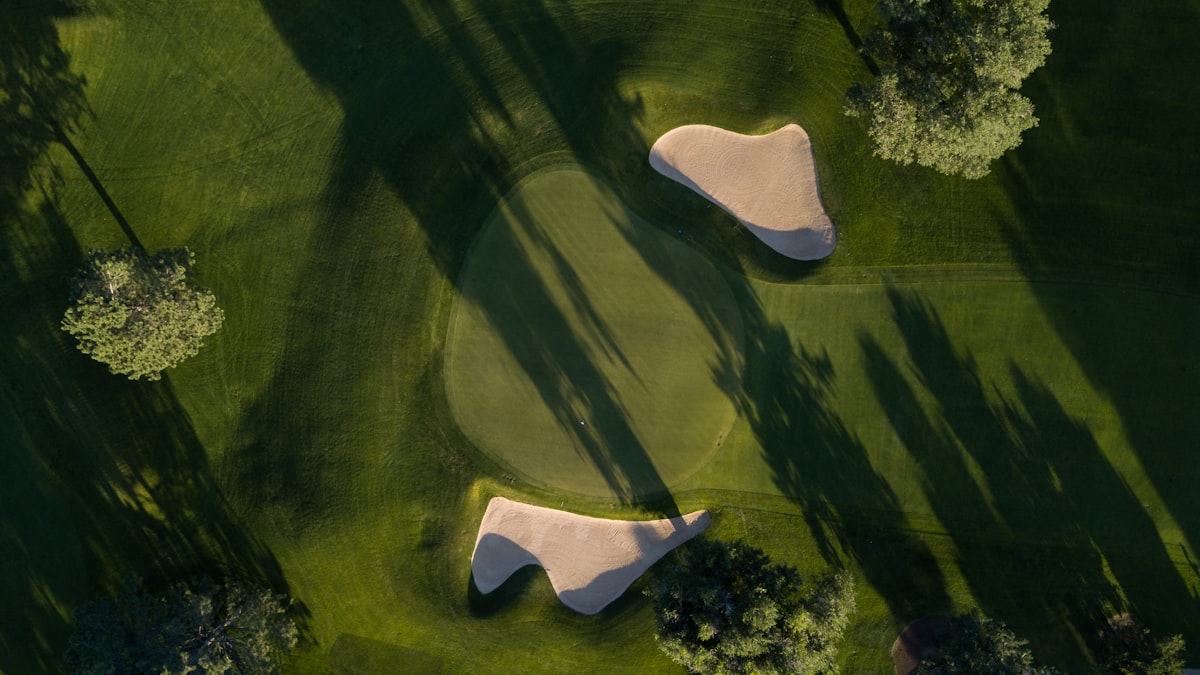
The 18th (par 4, 458 yards) finishes with one of the more intriguing green sites from the mid-century era: a banana-shaped putting surface protected by three bunkers and a pond lined with jagged rocks. The tee shot is straightforward. Everything after it is not.
Palmer's Ghost Still Walks the Property
Arnold Palmer passed away in September 2016, but his presence at Bay Hill hasn't faded. His office at the club is preserved exactly as he left it — a pilgrimage stop for players competing in the event for the first time.
There's a temptation to sentimentalize this, but the better way to understand it is through the course itself. Palmer's design philosophy was direct: golf should test every part of your game, and the course should be fair but unforgiving. He wasn't interested in trick holes or blind shots. He wanted you to see exactly what you were up against and then execute.
That's Bay Hill in a sentence. You always know what's coming. You just can't always handle it.
What to Watch This Week
The 2026 field is stacked. Scottie Scheffler is chasing a third Arnold Palmer Invitational title — only Tiger Woods has won it three times. Rory McIlroy has finished 10th or better in six of his last eight starts at Bay Hill, including a win in 2019. Xander Schauffele and Collin Morikawa, fresh off his win at Pebble Beach, round out a signature-event field of 72 players.
The key stat to watch is approach play from distance. Bay Hill's length and thick rough funnel the tournament toward players who can hit greens from 200-plus yards with consistency. Driving accuracy matters more here than at most venues because the rough genuinely penalizes — this isn't a course where you can spray it off the tee, hack out to the fairway, and still make par.
If you're looking for a dark horse, pay attention to players who are strong from tee to green but often let their putting hold them back. Bay Hill's firm, fast greens tend to equalize putting — everyone struggles on them, which means ball-striking separates the field more than usual.
The Course as Legacy
Most athletes leave behind statistics and highlight reels. Palmer left behind a golf course. Not just any course, but one that has hosted the best players in the world for nearly five decades and still finds ways to challenge them.
The Arnold Palmer Invitational isn't just a tournament played at a venue Palmer happened to own. It's four days of competition on a course that reflects one man's understanding of what golf should be: visible, honest, and hard. Every bunker placement, every green contour, every water hazard was a decision Palmer made or approved.
When Scheffler or McIlroy stands over a 220-yard approach to a tucked pin on Sunday, they're not just playing against the field. They're playing against fifty years of one man's vision for what a great golf hole looks like.
That's what makes Bay Hill different. The architect never stopped building.